Couples and marriage counseling
For couples stuck in the same fight or drifting apart. With your therapist, you'll see what's happening between you and find your way back to each other.
Request a free intro callIn person in McLean
Virtual anywhere in Virginia
Couples come to us for all kinds of reasons. A few we hear often:
“We keep having the same fight.”
“We feel more like roommates than partners.”
“Every hard conversation turns into an argument.”
“Trust was broken, and we want to rebuild.”
“Since the kids came, we've lost each other.”
“Intimacy has faded, and we avoid the subject.”
“One of us is halfway out the door.” “We're engaged and want a strong start.”No two couples are alike. If you can't quite say what's gone wrong, only that something has, you're welcome here too.
We treat nearly all of this in our outpatient setting. If you need more support, like an intensive outpatient or residential program, we'll help you find the right one.
Before
It's Tuesday night. One of you mentions the in-laws, or the budget, or whose turn it was. Ten minutes later, you're having the fight you've had a hundred times, word for word. By bedtime, you're not speaking.
After
It's another Tuesday, and the same subject comes up. This time, one of you says, “Wait, we're doing that thing again.” The other laughs. You still don't agree about the in-laws. But by bedtime, you're back on the same team.
Many couples walk in half expecting a referee. That's not the role. Your therapist starts by making the room safe for you both, so each of you can speak honestly without it turning into another fight. No one gets rushed, and no one gets ganged up on.
Maybe one of you pushes for closeness while the other pulls back. Maybe words meant as worry land as criticism. When it happens in a session, your therapist points it out to you both, so neither of you ends up the villain. Once you can both see the loop, it starts to lose its grip.
Most fights come down to two things: whether you still matter to each other, and whether you can count on one another when life gets hard. Those are tender questions to raise, so they tend to come out in disguise, as a complaint, a jab, or silence. Your therapist helps you each hear what the other is really asking, so you can answer that instead.
Our couples work is grounded in attachment science, which shows how our need for a secure bond shapes the way we love and fight, and systems theory, which looks at the patterns two people create together. Within that, your therapist draws on many approaches. Here are three we use often:
The Gottman Method
Built on decades of research by Drs. John and Julie Gottman into what helps couples last. It offers practical tools for handling conflict, repairing after a fight, and building friendship and trust.
EFT (Emotionally Focused Therapy)
Developed by Dr. Sue Johnson, it helps you see the cycle that drives your conflict and the feelings underneath it, so you can reach for each other in new ways.
IFIO (Intimacy from the Inside Out)
Developed by Toni Herbine-Blank, it brings Internal Family Systems (IFS) into couples work. Each of you gets to know the protective parts that take over in a fight, so you can speak and listen from a calmer, more open place.
Each clinician's bio lists the methods they use.
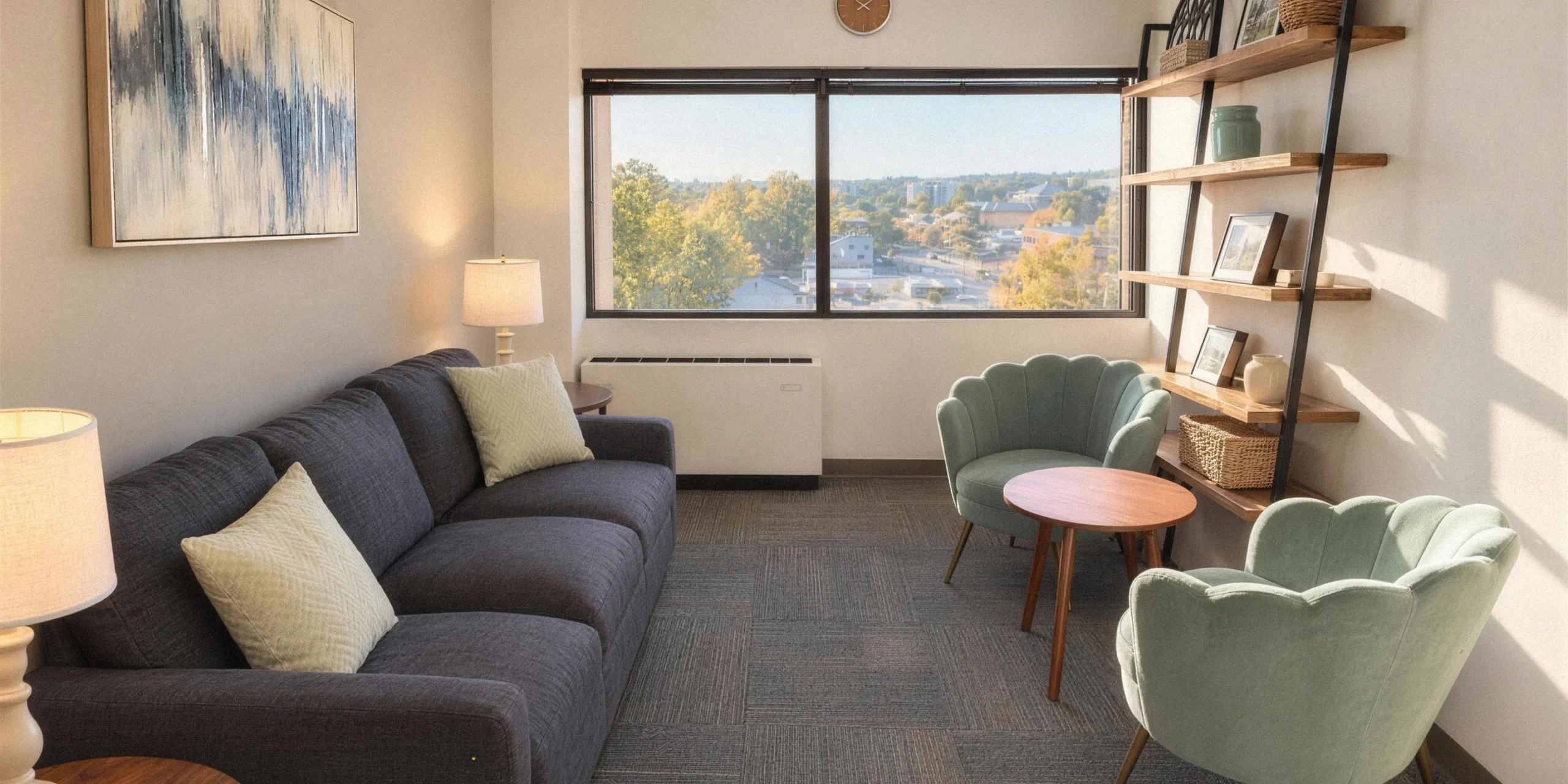
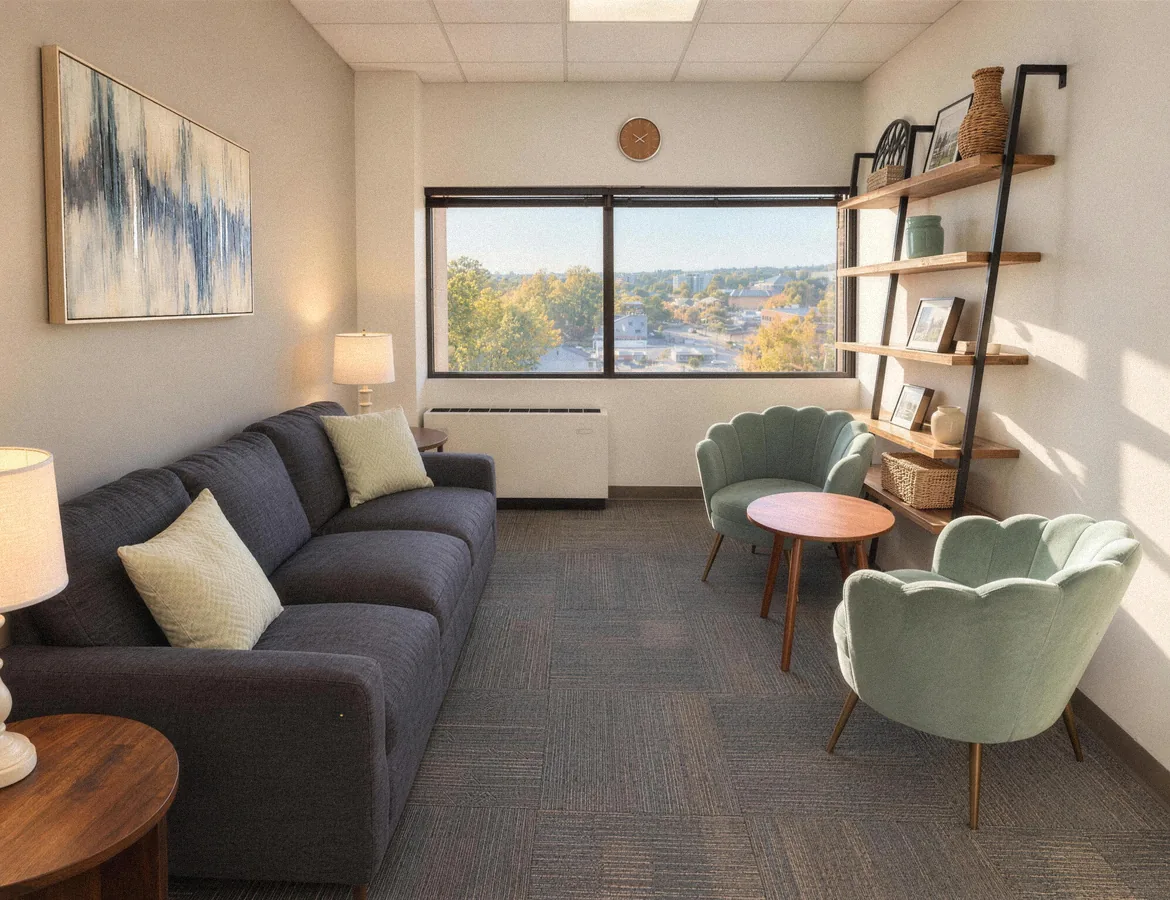
Most sessions are the two of you together, with some time one on one along the way. They often run 50 minutes, sometimes longer. Couples usually meet weekly or every other week, and you and your therapist will choose what fits. Come to our office in McLean, or meet by video anywhere in Virginia.
Looking for therapy just for you?
See Individuals →Meet the clinicians who work with couples. Each bio shares their training, their approach, and the methods they use.
Not sure who fits? That's what the intro call is for.
Request a free intro call Meet the whole team →Sessions range from $210 to $285, depending on your clinician.
Need a lower fee? Our Institute's supervised Clinical Interns see clients for $50 a session, or as little as $10 based on household size and income, and our staff clinicians can see a limited number of clients at a reduced rate.
Can I start if my partner won't come?
Yes. Plenty of people start on their own, and it can help: when you change your part in the pattern, the relationship often shifts too. We'll match you with an individual therapist for that work. If your partner joins later, you'll usually begin couples work with a different therapist, someone who meets you both at the same time. That keeps the work fair to both of you.
Can couples therapy help before things get really bad?
Yes, and that's often when it helps most. Small patterns are easier to change before they harden. Couples come to us at every stage: engaged, a few years in with young kids, or decades in and feeling distant. Others come in the middle of a crisis, and we can help there too. Couples therapy isn't a last resort. Think of it as a way to keep your relationship from needing one.
What happens on the intro call?
It's a free, 30-minute call with the clinician we think fits you best, based on your request. You'll talk about what's bringing you in and what you're hoping for, plus the practical stuff: fees, scheduling, and in person or virtual. It's also a chance for both of you to sense the fit. If someone else on our team is a better match, they'll make the introduction. You decide what's next.
Either of you can send the request, and one or both of you can join the intro call.
Send a short form. It takes about two minutes. Tell us who you're looking for help for and what's going on. A sentence or two is plenty.
Talk with a clinician. The clinician we think fits you best, based on your request, calls you for a free, 30-minute intro call. You'll talk through what you're looking for, fees, and format, and make sure it's the right fit.
Book your first session. We'll send you a link to schedule. Most people start in one week or less.
There's no commitment on the call. If we're not the right fit, we'll tell you, and help you find who is.
Request a free intro callIn crisis? Call or text 988, or go to the nearest emergency room.